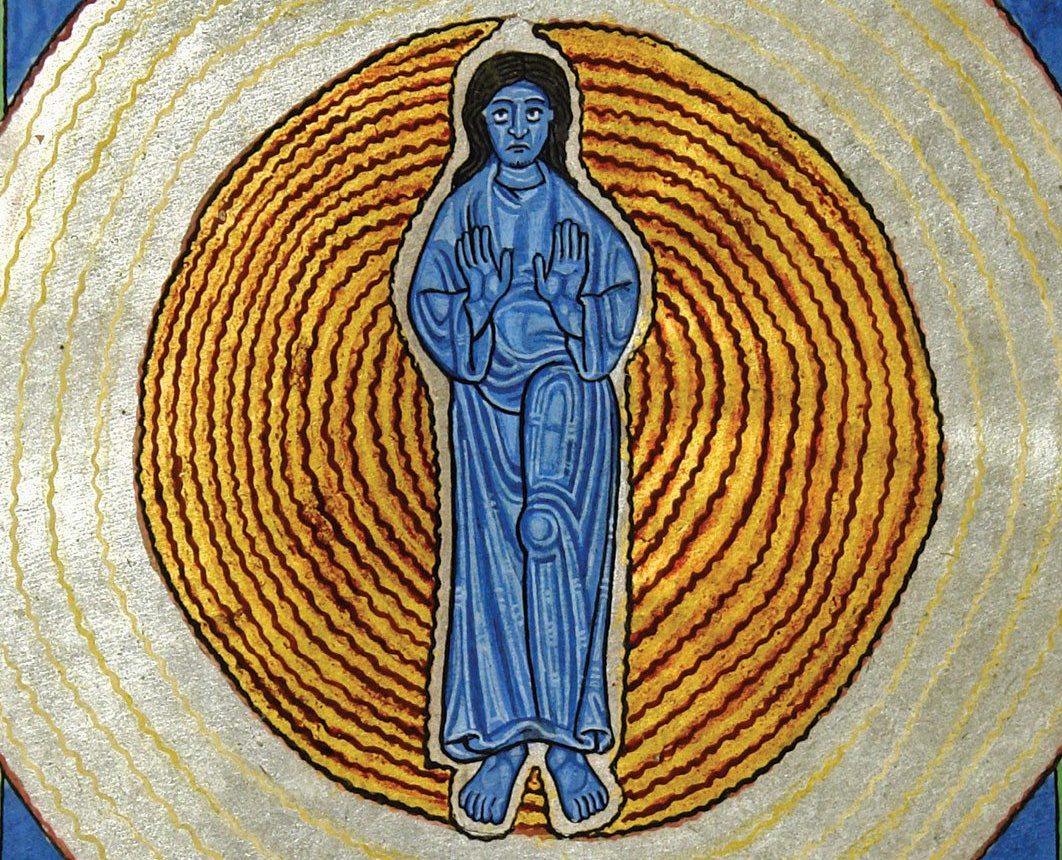
Year A, Sixth Sunday of Easter, John 14:15-21 & Acts 17:22-31 through a queer & interfaith lens.
Both the John 14 and Acts 17 readings for this Sunday depict a God who is wholly interconnected within Godself and with all humanity (and all Creation). Paul references two Greek poet-philosophers to describe this state of interbeing. We too can respectfully draw from various traditions to get a better picture of what that means.
Key points
- Jesus promises not to leave his disciples orphaned, or “fatherless,” and names that he is in the Father and the Father is in him. Exploring this “father” language alongside other terms Jesus uses for himself across the Gospels, we uncover something of the limitations of human language for relationships both human and divine. Jesus, like many queer found families, is taking the words he has available to him and ascribing them with deeper meaning.
- The concept that Jesus is in the Parent as the Parent is in Jesus, and that we too are in Jesus as he is in us, has parallels to the Buddhist concept of interbeing. Paul’s reference to a classical Greek philosopher-poet’s words, “In [God] we live and move and have our being,” reiterates this inextricable interconnectedness, or mutual indwelling.
- Paul quotes two Greek poet-philosophers to carry Christ’s good news to the Greeks. When we gather as many voices as possible at the table, we are granted grander glimpses of the divine in whom all things “live and move and have their being.”
- I’ll be posting an article on one of those references, Epimenides of Crete, soon, exploring the queer resonances in this sixth century BCE sage.
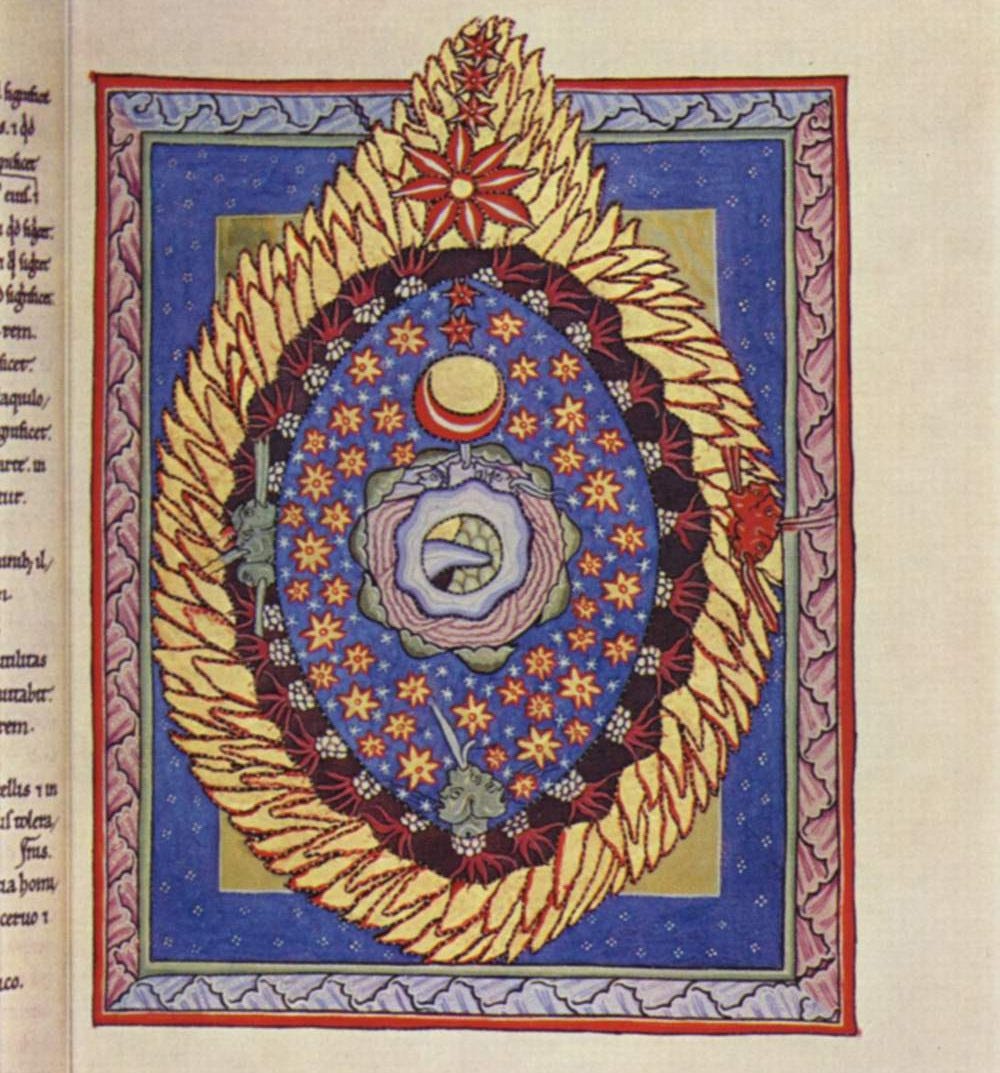
John 14:15-21
The lectionary continues right where it left off last week, with Jesus’s tender reassurances to his disciples that even though he must soon leave them, he will not abandon — or, as he says here, orphan — them.
“I will ask the Parent, [who] will give you another Advocate, to be with you forever. This is the Spirit of truth…You know hir because xe abides with you, and xe will be in you.
I will not leave you orphaned; I am coming to you. In a little while the world will no longer see me, but you will see me; because I live, you also will live. On that day you will know that I am in my Parent, and you in me, and I in you.” – John 14:18-20
The picture Jesus paints here is a queer one, blending relational language and dissolving boundaries.
The limitations of relational language
Shortly, Jesus will tell his disciples that he no longer calls them servants, but friends — which moves him from a higher status of master (the Greek kyrios means master as much as it means lord) to the mutuality of friendship (John 15:15). Meanwhile, Jesus frequently names himself as Son of the Parent God throughout the Gospels. Yet here he promises not to leave his disciples orphaned (from the Greek ὀρφανός, orphanos). The Septuagint uses this Greek word to translate Hebrew’s yāṯôm, “fatherless” — it describes those left bereft and vulnerable due to the loss of either both parents or their father (in biblical iterations of patriarchy, losing your father opened you up to more insecurity and potential exploitation).
If Jesus’s absence could be described as the disciples becoming “fatherless,” then that becomes yet another way to describe his relationship with his followers. He is teacher, friend, father, mother hen, master, servant, bridegroom, God.
In traditional human relational structures, no one person could be all those things to another! But some queer relationships come closer to achieving it. In queer found families, the same person might serve as mother and sibling and even lover all at once. To be clear, this is not incestuous! What we are doing is repurposing traditional terms because there are no words in the mainstream lexicon that exactly match what we mean; we use limited language to describe queerly unlimited ways of experiencing each other
…Of course, these queer ways of being in relationship aren’t truly unlimited. But Divinity’s connections both within its Triune self and with its created world might just be!
Jesus as Father or Parent as well as sibling, servant, friend makes perfect paradoxical sense, both through a queer lens and in light of the picture he continues to paint: That he is in the Parent and the Parent is in him.
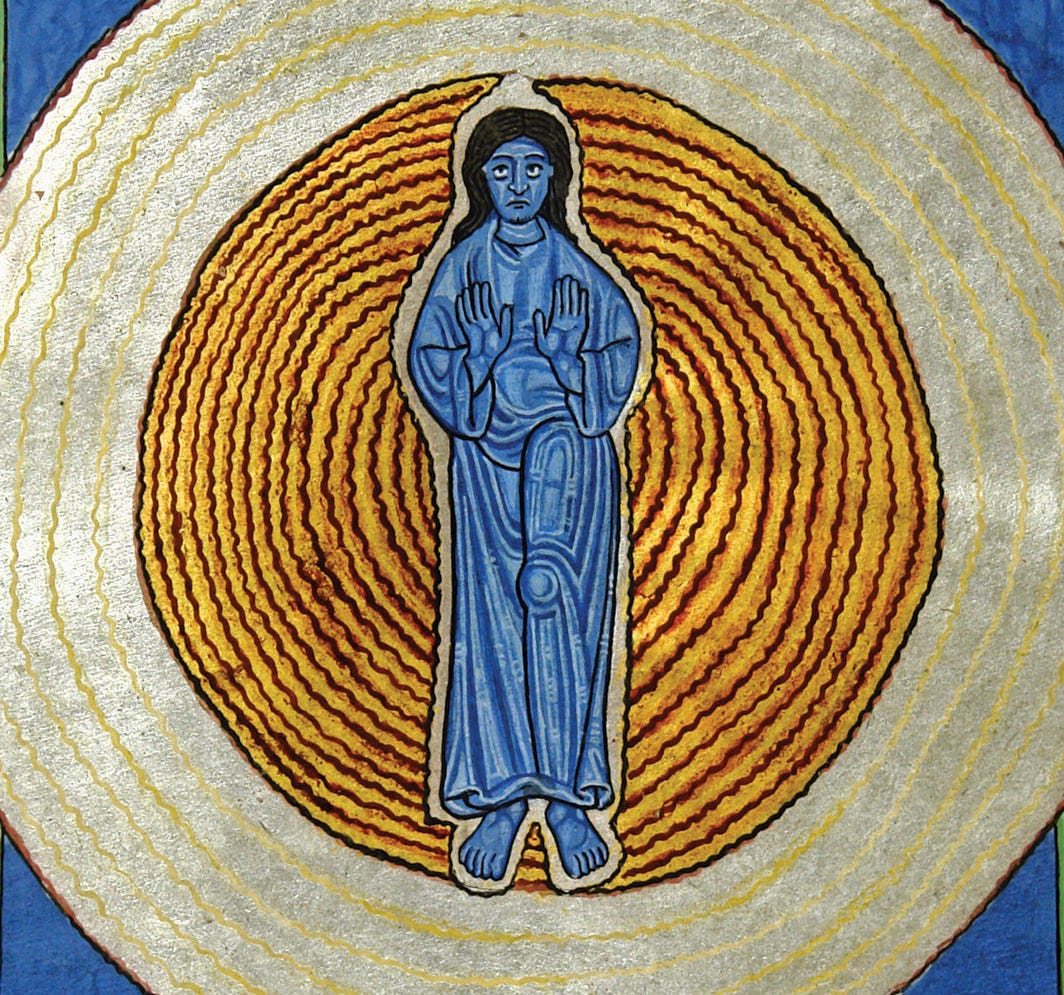
And then we are in Jesus as he is in us, which by implication means we are also in the Parent and the Parent is in us — an interconnectedness that would be difficult to draw on paper, as each being involved is both holding and is held by each other being! You might even call this…interbeing!
Interbeing, or the interconnectedness of all things
Interbeing is the term beloved Zen Buddhist monk Thích Nhất Hạnh coined to describe what East Asian Buddhists call perfect interpenetration, complete interfusion, or (and this one sounds very much like Christ’s “I in you and you in me”) — mutual inclusion. Whatever it’s called, this interconnectedness envisions every single thing (every phenomenon, every living being, every atom, etc.) simultaneously and entirely containing andbeing contained by all other things. Or, as Thích Nhất Hạnh puts it after inviting the reader to consider a sheet of paper:
“Everything—time, space, the earth, the rain, the minerals in the soil, the sunshine, the cloud, the river, the heat, and even consciousness—is in that sheet of paper. Everything coexists with it. To be is to inter-be. You cannot just be by yourself alone; you have to inter-be with every other thing. This sheet of paper is, because everything else is.”1
Another metaphor for this complete interfusion is that of Indra’s net, which originates from the Atharva Veda and thus was part of Hindu cosmology before also being adopted by Buddhism:
The net is said to be infinite, and to spread in all directions with no beginning or end. At each node of the net is a jewel, so arranged that every jewel reflects all the other jewels. No jewel exists by itself independently of the rest. Everything is related to everything else; nothing is isolated.2

Triune interbeing
It’s notoriously difficult to talk of the Trinity without committing one heresy or another (whenever I try, these two grumpy Irishmen pop in my head grumbling That’s modalism, Patrick!). But I think that this concept of interbeing can be employed to get across some of the Trinity’s key aspects: first, that while the Persons of God are indeed three distinct Persons, they are also inextricably One.
Trying to eff the ineffable, we label the three Persons of God things like “Father, Son, and Holy Spirit” or “Creator, Redeemer, and Sustainer” or “Lover, Beloved, and Love itself.” (Note how, as with queer found family, these names sometimes seem to clash “incestuously” — how can Father and Son also be Lover and Beloved? But it’s because we’re using limited human terms to describe the ineffable. The words fail as much as they succeed in helping us grasp God; for instance, “Father” and “Son” traditionally indicates hiearchy and difference in age, neither of which is accurate for the Persons of the Trinity.)
These names certainly describe elements of our Triune God, including some of the distinctions between each Person. However, if we solidify these distinctions too much, attempting to keep the Trinity neat and tidy with firm boundaries between each Person, we cease to speak of a God who is One. No one Person holds sole “dominion” over one quality of the Divine; each Person expresses all qualities. For example, the “Son” also has creative power; the “Father” also sustains all things; the Spirit also brings liberation; and so on.
Some of the earliest Christians employed a Greek term to describe this Triune interfusion, or mutual indwelling: perichoresis (from peri, “around,” and chōreō, “come” or “go”). Modern theologians have drawn from this concept the allegory of Trinity as a dance between three partners spinning together so perfectly harmoniously that they begin to blur.
[…P]erichoresis invites us to think in a new way about the very meaning of ‘one’ and ‘personal.’ The oneness of God is not the oneness of a distinct, self-contained individual; it is the unity of a community of persons who love each other and live together in harmony. And ‘personal’ means by definition inter-personal; one cannot be truly personal alone but only in relation to other persons.
Such is the unity and personal character of God the Father, Son, and Holy Spirit. There is a deep, intimate, indissoluble unity between them. They are not three independent persons who decide to get together to form a club (or a dance group!) that might break up if the members decide to go it alone. They are what they are only in relationship to each other. Each exists only in this relationship and would not exist apart from it.…Father, Son, and Holy Spirit are one social person, for each is with and for the other so intimately that they can be said to live in and through each other.
– Shirley Guthrie, Christian Doctrine

Interbeing between divinity, humanity, and all creation
The Son is in the Parent is in the Spirit is in the Son is in the Spirit is in the Parent is in the Son ad infinitum; together, they are a perfect community, a perfect relationship.
Yet God chose to create, to let that perfect, self-contained love overflow beyond Godself! Thus we are invited into this perichoresis, this interbeing, invited to recognize the truth of Jesus’s words: “I am in my Parent, and you and me, and I in you” — all bound together with the Spirit, our advocate (or, as the CEB translates, companion) whom God is sending (v. 17) and who has been here all along, from the Beginning.
That’s the picture Jesus paints in this John 14 passage: the distances of time and space melt away; the boundaries between beings merge and mix!
It’s fitting that the lectionary pairs this passage with Acts 17, in which Paul notes that “God is not far from each one of us” (v. 27b) and that
“In [God] we live and move and have our being.” – Acts 17:28
Acts 17:22-31
The verses of Acts 17 leading up to this week’s passage recount Paul’s flight from alleged persecution3 to Athens, where he spends weeks engaging not only with Athenian Jews, but gentiles as well. Due to their love of new and interesting ideas (v. 21), the gentile Athenians take an interest in his proclamations about Jesus. They lead Paul to Areopagus, where he gets the chance to give “the fullest and most dramatic speech of [his] missionary career.”4
Paul starts by appealing to the Athenians’ spirituality, noting all their altars and shrines — including one dedicated to “an unknown god” (v. 23). He explains that this “unknown” deity is actually the God who “made the world and everything in it” — the Abrahamic God.
Paul, a Roman citizen as familiar with Greek things as Jewish things, smartly finds ways to connect renowned Greek poet-philosophers, quoting two of them:
For ‘In him we live and move and have our being’; as even some of your own poets have said, ‘For we, too, are his offspring.’ – v. 28
The latter half of the verse, “We too are his offspring,” most likely comes from the Stoic philosopher Aratus, who opens his great work Phaenomena thus:
Let us begin with Zeus, whom we mortals never leave unspoken.
For every street, every market-place is full of god.
Even the sea and the harbour are full of this deity.
Everywhere everyone is indebted to god.
For we are indeed his offspring …
Paul sure knew how to pick the perfect reference, selecting one that not only supports his point about divinity’s pervasiveness, but is even set in the same scene he and his audience inhabit! Of course, the poem is talking about Zeus, while Paul is winding up for his pitch about the Abrahamic God raising Jesus from the dead.
Meanwhile, in describing a God in whom we “live and move and have our being,” Paul seems to be paraphrasing the sixth-century BCE sage Epimenides of Crete. I have grown short on time to dive into the queer resonance of this prophet; I’ll put out another article soon on how for the Greeks, this sage embodied both the awe and horror of one who is “unnatural” — just as Christ does in exploding the binary between life and death.
Subscribe to be notified when I put out the article on Epimenides!
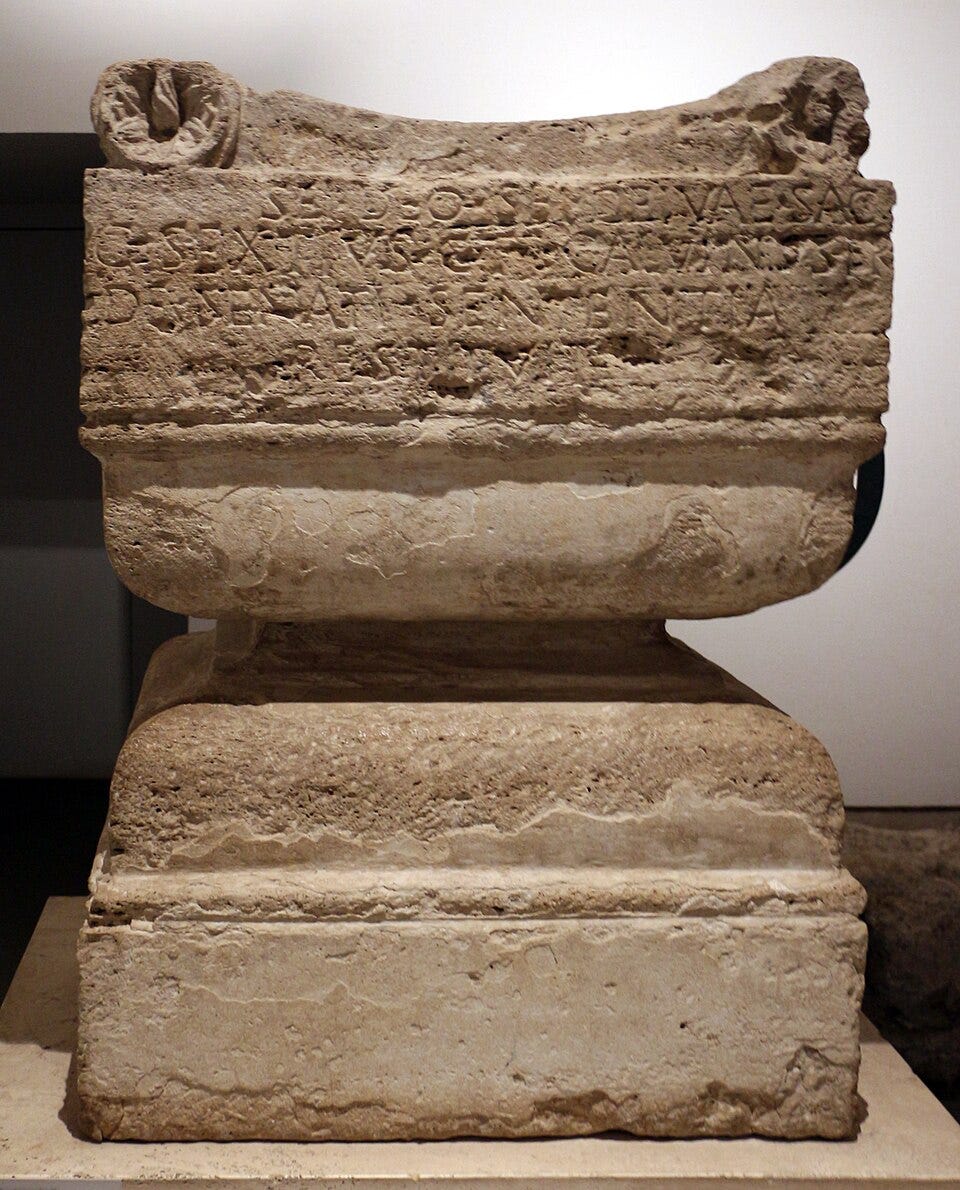
At least some of the early Christians recognized this reference to Epimenides, including Clement of Alexandria, who noted that Paul was willing to “attribute something of the truth” to a Greek, a gentile” and was “not ashamed, when discoursing for the edification of some and the shaming of others, to make use of Greek poems.”5
There is somewhat of an air of condescension in both Paul’s and Clement’s words, but I do appreciate the biblical precedent in quoting voices from other religions and cultures. If God truly is the one in whom we all move and live and have our being; if we truly are all interconnected like jewels in a net or raindrops in a web, then the divine pervades all peoples. God’s Spirit, God’s Breath “blows wherever she wills” (John 3:8). Only when we invite all voices to the table do we begin to catch a grander glimpse of God.
Footnotes
- Thích Nhất Hạnh, In The Other Shore: A New Translation of the Heart Sutra with Commentaries, 2017. For more on Buddhist conceptions of interconnectedness, check out this article. ↩︎
- https://pragyata.com/the-vedic-metaphor-of-indras-net/ ↩︎
- For information on Acts’ depictions of Jews as violent persecutors of Paul and other apostles and how these depictions have motivated antisemitism across Christian history, give this video a watch. ↩︎
- Mikael C. Parsons, https://www.workingpreacher.org/commentaries/revised-common-lectionary/sixth-sunday-of-easter/commentary-on-acts-1722-31-5 ↩︎
- Clement of Alexandria, Stromata Book 1, chapter 14, c. late second century. ↩︎

