Key points:
- One way we might interpret the disciples’ inability to recognize Jesus is by looking at how cultural expectations shape what we see and fail to see.
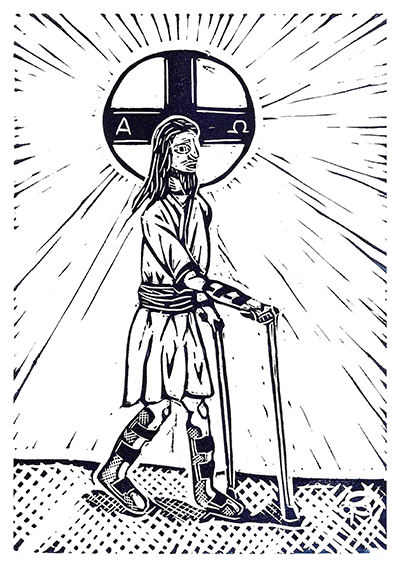
- Perhaps the risen Christ’s wounds cause him to walk differently than he used to — slowly, haltingly, with a cane. Just as the blind man isn’t recognized by his neighbors once he becomes sighted, perhaps no one recognizes Jesus because he has become more visibly disabled. They don’t expect to see Jesus alive, or the divine in a disabled body — so they don’t.
- When trans people transition, loved ones often “grieve” the person they “lost.” But you didn’t “lose a son”; you gained a daughter! Your beloved is not dead — they are becoming ever more alive!
The Emmaus story of Luke 24 reminds us that there are more disciples than just the Marys, Martha, and the main 12: Cleopas and an unnamed Jesus-follower are the ones to whom the risen Christ first appears.
And they fail to recognize him. Or, as verse 16 puts it, their eyes were “prevented” from recognizing Jesus — what’s that all about?
The Greek root for that word “prevented” is κρατέω (krateó), which more literally means “take hold of,” “take control of.” The passive voice used in this verse begs the question, taken control of by what/whom? Many, many people have speculated, but here’s my queer/crip reading:
It’s normativity that has taken control of the disciples’ gaze.
When you are trans or disabled, people frequently misperceive you; they see what they want to see, what they expect to see.
Cisnormativity tells us that humans come in two and only two types — woman and man. Our brains have been trained to categorize every person we encounter into one of those two boxes so rapidly we don’t even notice it’s happening unless. If you haven’t done the work to truly retrain your brain to understand that anyone of any gender can look like anything, you will fail to see us for who and what and all we are.
Ableism tells us that disabled persons are not whole human beings, that a disabled life is a tragic life. Wheelchair users, d/Deaf persons, people with intellectual disabilities, and others frequently report being talked over as if they weren’t there, or down to as if they were a baby. When we find a disabled person who is simply, you know, living their lives — making dinner, getting married, hiking, having kids, writing poems — we turn them into inspiration porn because in society’s eyes, disabled achievement, disabled genius, disabled joy is an anomaly. In reality, actor and playwright Neil Marcus tells us, “Disability is not a brave struggle or ‘courage in the face of adversity.’ Disability is an art. It’s an ingenious way to live.”
So what form did Jesus come in that the disciples’ eyes simply couldn’t process him as Christ?
As I brought up for John 20’s story of Thomas, disability theology proclaims a risen Christ who is disabled, whose crucifixion wounds would have been impairing wounds. The feet that carried Jesus across the entire Palestinian region now bear the wounds of crucifixion — his gait, his posture, his movement forever transformed.
Maybe the “stranger” who joins these two on their way walks differently than Jesus did before his death. Maybe he uses a cane. Moves slowly, haltingly, as if relearning how to walk.
John 9’s story of the man born blind was in the lectionary just a few weeks ago. In that tale, a man born blind is no longer recognized by his neighbors once he becomes sighted. They don’t expect a blind man to suddenly see — so they don’t see him. More importantly, they don’t expect a blind man to act with agency, to speak up for himself, to be anything but the street corner beggar — so they don’t believe him. Insist on getting his parents so that they can confirm his identity.
I imagine something similar is happening here on the road to Emmaus. They don’t expect to see Jesus alive, or the divine in a disabled body — so they don’t.
When do they finally recognize Jesus? When he breaks bread with them.
Perhaps Jesus has a certain way of saying the blessing, or of holding up the loaf as he breaks it; perhaps he puts so much warmth into his words that logic and biases simply crumble apart as he does so. Yes, Jesus is dead. Yes, this man moves differently than Jesus did. Nonetheless this is Jesus! “Were not our hearts strangely warmed within us?” The heart burns past presumption.
A Queer joy: What we see as death is sometimes new life
The lectionary reading ends with these two disciples going to tell the others about their encounter with Christ, only to find that the others are already talking excitedly amongst themselves because Jesus appeared to Simon too! But I recommend reading a couple verses longer:
36 While they were saying these things, Jesus himself stood among them and said, “Peace be with you!” 37 They were terrified and afraid. They thought they were seeing a ghost.
38 He said to them, “Why are you startled? Why are doubts arising in your hearts? 39 Look at my hands and my feet. It’s really me! Touch me and see, for a ghost doesn’t have flesh and bones like you see I have.” 40 As he said this, he showed them his hands and feet. 41 Because they were wondering and questioning in the midst of their happiness, he said to them, “Do you have anything to eat?” 42 They gave him a piece of baked fish. 43 Taking it, he ate it in front of them.
There is a tenderness in how Jesus addresses his friends. He knows they don’t get it; in coming back to life, he’s exploded the very definition of death. So he guides them — to touch, to see, to understand.
A narrative I hear too often from the families of a trans person who has begun to live into the fullness of who they are is that of death. You cannot conceive of someone you’ve always seen as one gender — with all the expectations and familial roles tied into that gender — being anything else. So you grieve as if that person has died — but the reality is that their loved one is finally becoming more and more alive. Becoming more and more themselves.
Once your eyes adjust, you’ll see your loved one is still who they always were — just brighter, lighter, freer. Pay attention, and you’ll know them in their “breaking of the bread” — their quirks and passions, laughter and memories.
Perhaps one day they’ll share an old inside joke and — oh, I see now! It is you!! — and your heart will be strangely, surprisingly, stupendously warmed.
God comes to upturn our every expectation. Blessed are the ones who see past presumptions, who break beyond binaries, who remain steadfast even when the world flips upside-down.

