Categories
Hymns Hymns Multifaith Other search markers worship-planning

“We Are One in the Spirit” revised for interfaith use

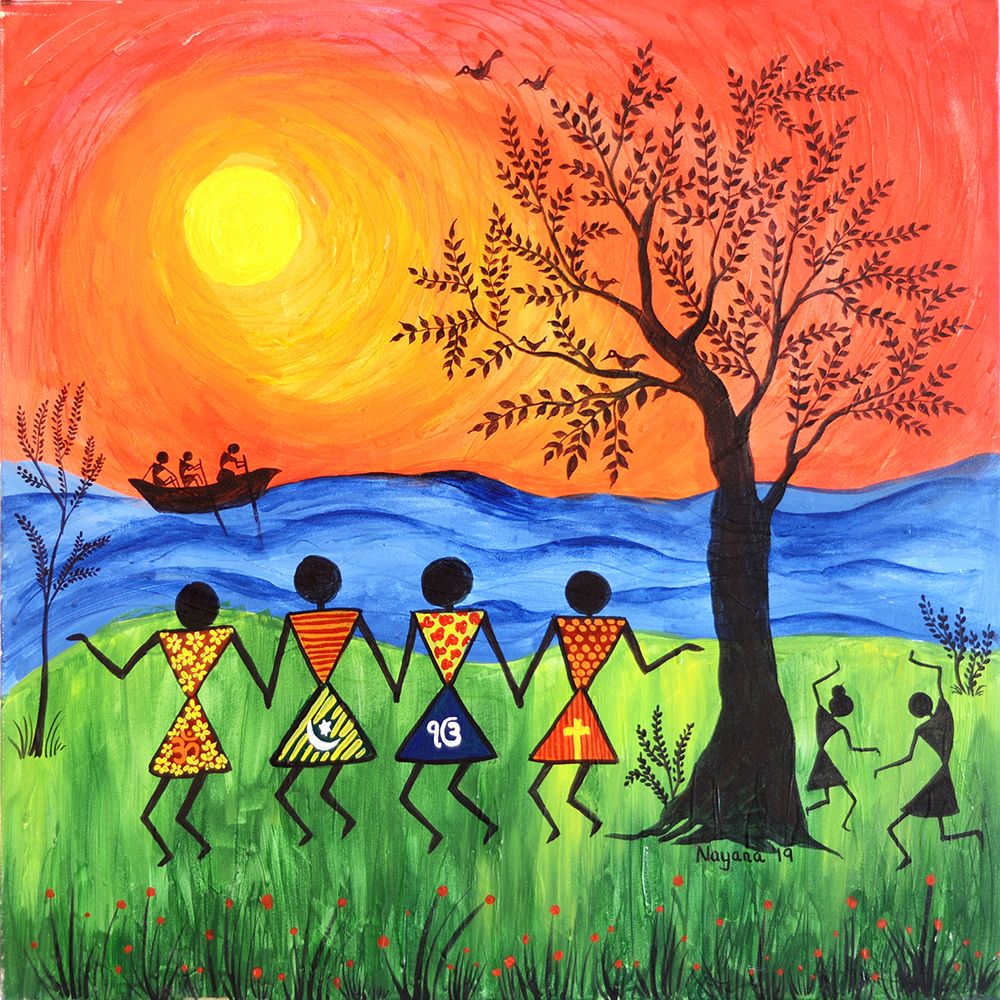
This hymn (original lyrics here) is a beautiful call to solidarity and activism among Christians of all denominations; what if we made it interfaith, too? Revisions alter Christian-specific language and also add in two new verses.

Credit info & explanations of changes are below the lyrics.

We are one in the Spirit,
we are one in the Lord,
we are one in the Spirit,
we are one in the Lord,
and we pray that our unity
will one day be restored —

Refrain:
And they’ll know God is with us
by our love, by our love;
yes, they’ll know God is with us
by our love.

We will move with each other,
we will move hand in hand,
we will move with each other,
we will move hand in hand,
and together we’ll spread the news
that God is in the land —

(Refrain)

We will work with each other,
we will work side by side,
we will work with each other,
we will work side by side,
and we’ll guard each one’s dignity
and save each one’s pride —

(Refrain)

All praise to our Maker,
from whom all things come
and in whose holy image
every human belongs.
Let us join our rich harmonies
in one holy song —

(Refrain)

Credit Info

Please feel free to spread this around, to sing it in your own communities, etc.! Just include credit to Avery Arden at binarybreakingworship.com.

If your community does make use of my revised verses, I would love to know about it. If you post a video of it being sung anywhere, I would love to hear it!! You can contact me at queerlychristian36@gmail.com.

And if you have any suggestions for further revision, please do let me know that too. Let us all join together in the endless effort to draw our circles wider!

Reasons for Revision

Also called “They Will Know We Are Christians,” this hymn was written in the 1960s by Catholic priest Peter Scholtes for use at ecumenical and interracial events. Its themes reflect the post-Vatican II urge to bring Catholic tradition to life in new and active ways, and to interact with our neighbors in faith more intentionally.

As such, “We Are One in the Spirit” “has become an important piece in the church’s efforts to sing a theology of active participation and discipleship in and for the world.”

The songs we sing in worship shape the people’s conception of who God is and what God is doing in the world. I think this song excellent as it is! But I think it could be powerful to utilize at interfaith, not only ecumenical, gatherings — particularly gatherings of persons of the Abrahamic faiths, who share our one God and for whom language of spirit and Lord is familiar.

At this moment in time, I am thinking of places like Minneapolis, where leaders of many faiths — particularly so many Jews and Christians! — have joined together to broadcast the message that God is on the side of the immigrant.

My revisions are light, simply taking out the word Christians and altering the last verse so that it is not longer Trinitarian (praising Father, Son, and Spirit) but emphasizes a shared Creator.

Another small revision is altering “walk with each other” to “move with each other” to include wheelchair users and other modes of transportation. (It could also be interpreted as moving together in the form of dancing, or marching, etc.!)


Categories
Holy Days Hymns Other search markers

“Holy, Holy, Holy” revised

Scroll lower for credit info, reasons for revision, and downloadable sheet music.

Unaltered lines are in light gray; altered lines are in black.

Holy, holy, holy!
Lord God Almighty
Early in the morning our song shall rise to thee
Holy, holy, holy!

Justice wed to mercy,
God in three persons, blessed Trinity!

Holy, holy, holy!
All the saints adore thee,
Casting down their golden crowns around the glassy sea.
Cherubim and seraphim,
falling down before thee,
Who was and is and evermore shall be.

Holy, holy, holy!
Sacred darkness cloaks thee,
Granting us mere glimpses of thine untold Mystery.
Still, thine image shows thee
in each human body:
Thou art our breath, our love and artistry.

Holy, holy, holy,
Although almighty,
Thou stripped off omnipotence to share our frailty.
Only Thou are holy,
yet thou chose the lowly —
With the despised, there shall thy Spirit be.

Holy, holy, holy!
God of the lowly!
All thy works shall praise thy name
In earth and sky and sea
Holy, holy, holy!

Justice wed to mercy,
God in three persons, blessed Trinity!

Credit Info:

Please feel free to spread this around, to sing it in your own communities, etc.! Just include credit to Avery Arden at binarybreakingworship.com.

If your community does make use of my revised verses, I would love to know about it. If you post a video of it being sung anywhere, I would love to hear it!! You can contact me at queerlychristian36@gmail.com.

And if you have any suggestions for further revision, please do let me know that too. Let us all join together in the endless effort to draw our circles wider!

Reasons for Revision

This hymn by Anglican archbishop Reginald Heber (1783–1826) is a lovely piece of pure adoration of the Triune God. My personal appreciation of it centers on how it spans centuries — published the year Heber died, it’ll be two hundred years old next year! — and traditions:

I grew up singing it in Catholic Mass; I sing it now in a Presbyterian church; and I enjoy queer musician Sufjan Stevens’s cover of it. Heck, even the non-Trinitarian Latter Day Saints/Mormons sing it (altering “God in three persons, blessed Trinity” to “God in His glory, blessed Deity”). Thus when we sing this song we do so together not only with “cherubim and seraphim,” but with a vast cloud of human witnesses.

To better encapsulate the hymn’s expansive nature, and to infuse it with key concepts from liberationist theologies, I have revised parts of it with several goals:

  • To move from an emphasis on God’s “might” to God’s solidarity and abiding Presence.
  • To remove an instance of patriarchal language (“sinful man”).
  • To move from an equation of darkness and sightlessness with sinfulness (“Though the darkness hide thee / though the eye of sinful man thy glory may not see”) into an appreciation for the thick darkness — Hebrew עֲרָפֶל arafel — from which God guided the liberated Hebrews.
  • ^ That stanza on God’s hiddenness is the part of the hymn I changed most — I ended up turning it into two stanzas! Refocusing that hiddenness around Mystery rather than sin, and taking the opportunity that afforded me to explore how the Trinity chooses to relate to humanity in the Imago Dei, in the Incarnation, and through the Holy Spirit.

I am thankful to Dr. Matt Webb for his input on my revisions. If you notice anything more to change up in this hymn, let me know!

Sheet Music